Posted on July 16, 2026 by Jake Kincer and Natalie Houghtalen
On July 4th, 2026, America celebrated its 250th birthday. Meanwhile, the nuclear industry celebrated something else: it met and exceeded a deadline many believed it couldn’t–and made history in the process.
In May 2025, President Trump directed the Department of Energy (DOE) to get at least three advanced reactors critical by Independence Day 2026. The nuclear industry is often measured in decades, not months, so this ambitious goal was met both with skepticism and excitement.
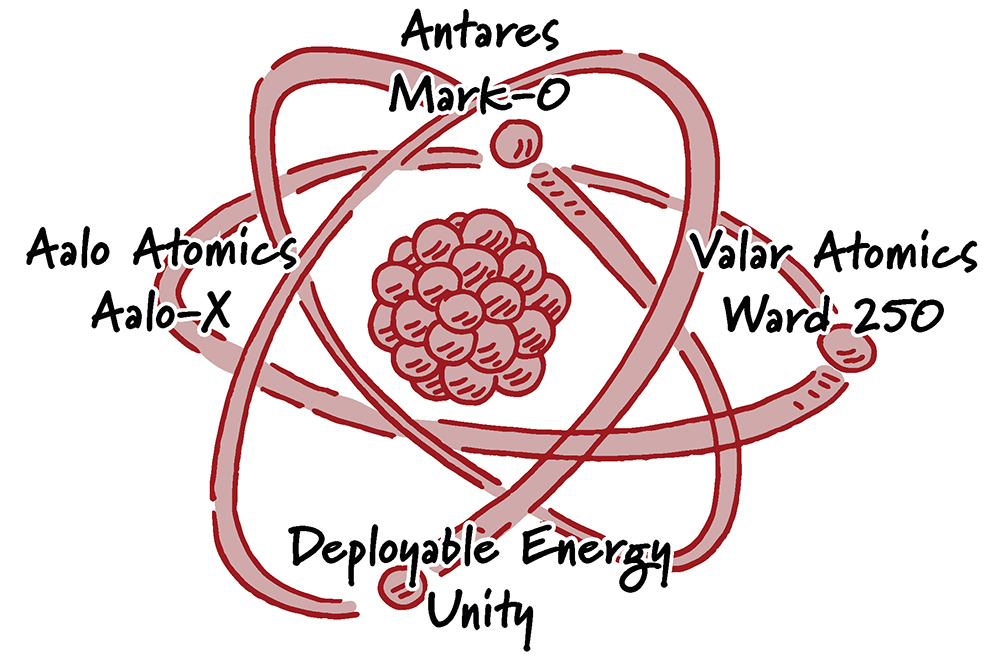
The goal turned out to be conservative. The program overshot. Four DOE-authorized test reactors achieved criticality by the deadline. Over the last month, the Antares Mark-0, Valar Atomics Ward 250, the Deployable Energy Unity and Aalo Atomics Aalo-X achieved criticality. This makes the United States the first country in history to achieve criticality in multiple unique advanced microreactor designs in a single month.
While the criticality goal made the headlines, the Reactor Pilot Program demonstrated something even more important: that private-industry-led, government-enabled programs are the fastest way to move from design to demonstration. The national labs were empowered by the May 2025 executive order to take advantage of existing statute in the Atomic Energy Act and more recent Congressional authorizations signed into law near the end of President Trump’s first term within the Nuclear Energy Innovation and Capabilities Act (NEICA).
The Reactor Pilot Program demonstrated a new model for how the government can accelerate private innovation. The leap straight from the design table to commercial operations is one of the reasons why commercial nuclear is often plagued by technology and construction risk. Testing and iterating can mitigate these risks. These test reactors can help bridge the gap to deployment by establishing a foundation for supply chains, construction and operating procedures, fuel qualification and operating data. The reactor criticality goal, strong DOE leadership and industry-funded user facilities brought these first four test reactors online.
Zero-power criticality was technically first achieved with a pile of bricks in 1942 and many steps away from reliably delivering commercial power. It simply demonstrates that the nuclear chain reaction behaves as expected and is a milestone after the first leg of the race. The true value of these demonstrations is in the journey to achieving that milestone–reducing technological uncertainty in a way that only real-world experience can.
These reactors are not expected to be a commercial product. Historically, reactor designers have felt pressure to pursue a commercial project too early and therefore carry technical, regulatory and financial risk simultaneously into their first project. This program offered the ability to progressively derisk technology in phases.
Instead of jumping straight to commercialization, companies now have a dedicated pathway to build, operate, test, modify and improve first-of-a-kind designs under DOE authorization before pursuing commercial deployment. The main product of this program isn’t reactors, but data, experience and confidence. Validating designs, collecting operational data, training operators, and gaining project management and construction experience are all invaluable to new companies working on innovative technology, nuclear or not.
The Reactor Pilot Program itself was intended as a sprint. An ambitious, time-boxed goal that would build confidence and move the ball forward on technological readiness. The next phase of this effort is the new, sustained Launch Pad initiative administered by the National Reactor Innovation Center (NRIC) at Idaho National Laboratory (INL).
Launch Pad isn’t a replacement for the pilot program, but an evolution of its philosophy of innovation. Across three capabilities, Launch Pad will feature even greater opportunities for innovative companies to prototype their technology:
Starting in 2026, the U.S. will have a dedicated platform to provide reactor developers with access to national lab expertise, dedicated testing infrastructure, and a framework for demonstrating prototypes.
Each company will have different goals and objectives through these programs. Some developers may sprint toward criticality, while others may spend more time developing a closer-to-commercial design. Not every one of these efforts will ultimately succeed, which is fine. That’s exactly how innovation should work.
The achievement of this program wasn’t just meeting the criticality goal. There is, after all, still a significant amount of work to be done before that translates into commercial results. The greatest achievement is unlocking America’s ability to innovate and build.
The revitalization of the nuclear industry has the makings of a hallmark accomplishment of the Trump administration. But to get there, eventually, prototypes will need to become commercial offerings. Companies must demonstrate reliable operation, develop repeatable manufacturing methods, build supply chains, attract private capital and secure customers. Ultimately, they need to prove they can put electrons on the grid reliably and at a competitive cost.
As these companies progress toward commercialization, the July 4, 2026 goal will be remembered not as the end of a successful program, but as the revitalization of the American nuclear innovation engine.