Posted on September 25, 2026 by Matthew Mailloux
This week, the Department of Energy Hydrocarbons and Geothermal Energy Office (HGEO) announced more than $99 million in new awards, supporting 21 pilot and demonstration projects to test and characterize enhanced geothermal systems (EGS). The projects span geothermal resources in eight states, stretching from Washington’s Wind River Valley to New Mexico’s Rio Grande Rift to Alaska’s Cook Inlet.
Additionally, Fervo Energy announced first power at its flagship Cape Station project, meaning the project is now delivering power to the grid. This major breakthrough for next-generation geothermal marks what Fervo has called “the first time a utility-scale enhanced geothermal development has reached this milestone anywhere in the world.”
The fact both of these major announcements come within 72 hours of each other is a testament to the momentum behind the geothermal industry. These announcements reflect years of hard work to establish the right financing and permitting policies, prove new technologies and deliver real projects that produce clean firm power at scale.
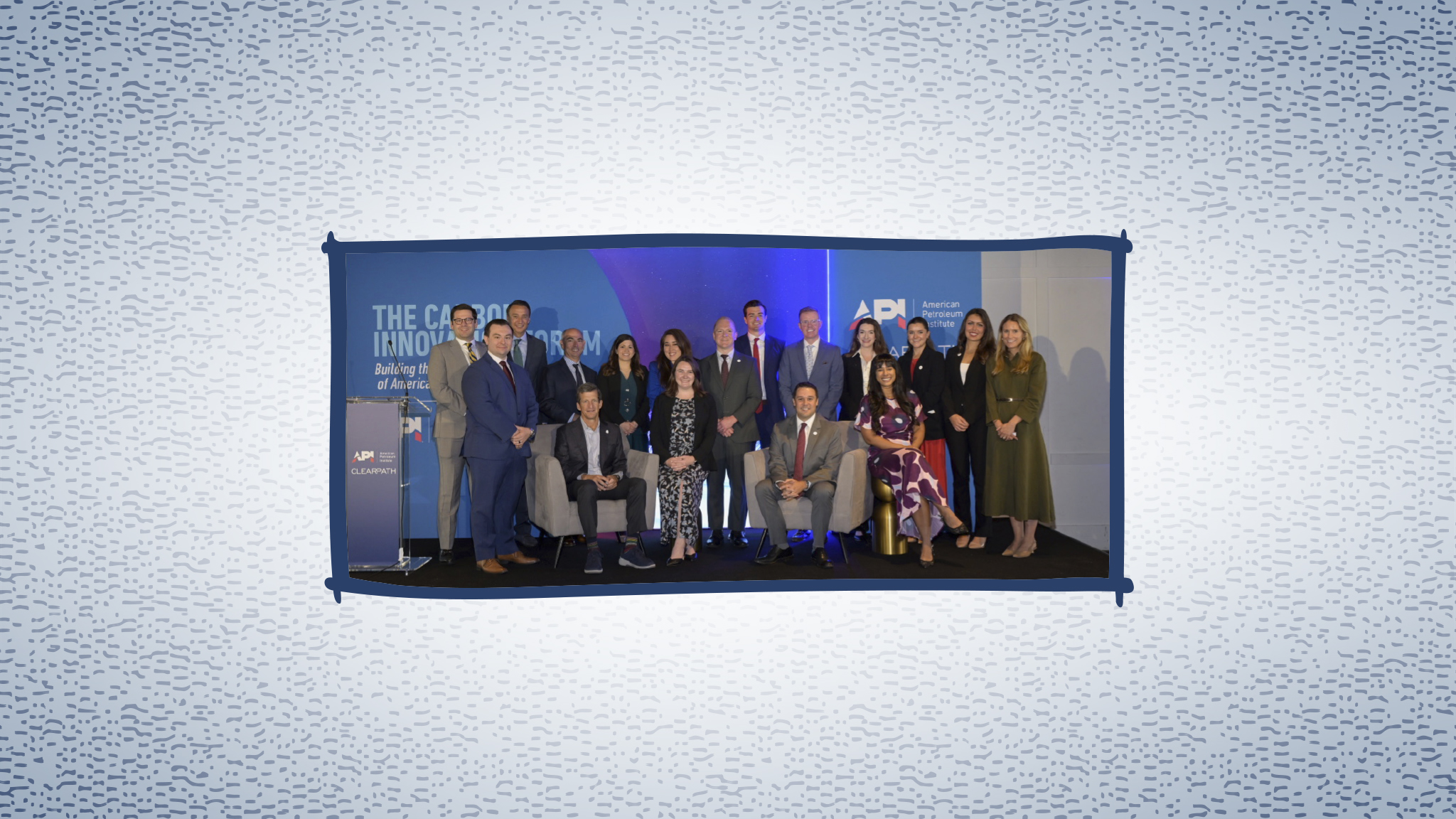
For DOE’s part, Under Secretary of Energy Kyle Haustveit made the award announcements during a fireside chat moderated by ClearPath’s Head of Policy, Lisa Epifani at the Geothermal Rising Conference in Houston, TX. Earlier this year, Haustveit told the Senate Energy and Natural Resources Committee this would be the largest competitive geothermal funding opportunity in the Department’s history, and this announcement delivers.
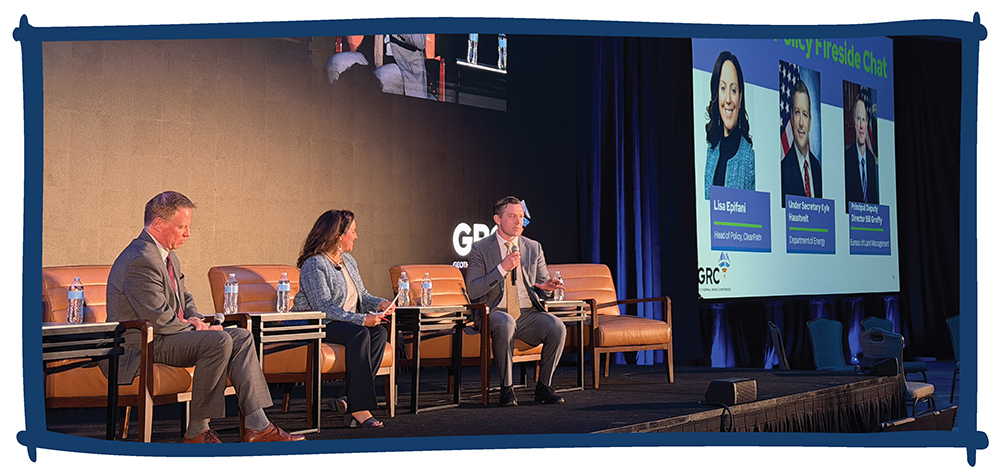
DOE Under Secretary of Energy Kyle Haustveit and BLM Principal Deputy Director Bill Groffy joined a fireside chat with ClearPath’s Head of Policy, Lisa Epifani, at the Geothermal Rising Conference in Houston, TX.
It’s the latest proof point in a model that has already delivered results: federal dollars supporting the highest-risk part of the technology innovation curve, later paving the way for private capital to take over after projects have been proven at commercial scale.
That model matters more with increasing electricity demand. AI, manufacturing and reshoring are straining a grid that needs more firm, dispatchable power as soon as possible. Geothermal is uniquely positioned to answer that call and next-generation EGS technology means it’s no longer confined to a handful of geologic hotspots in the west. DOE estimates next-generation geothermal could supply at least 90 gigawatts of American electricity by 2050 — a hundredfold increase from today, putting it on par with the Nation’s nuclear power fleet.
The 21 new awards break down into two categories. Five for EGS field tests and another 16 for earlier stage resource characterization. Five projects will conduct field-scale EGS tests at commercially relevant depths and temperatures, powered by industry leaders Fervo Energy, Zanskar and Quaise Energy. An additional 16 projects will identify and confirm promising geothermal resources, generating subsurface data that DOE will make public through the Geothermal Data Repository to share the learning value of each well across the industry.
2026 Geothermal Pilot and Demonstrations Award Selections
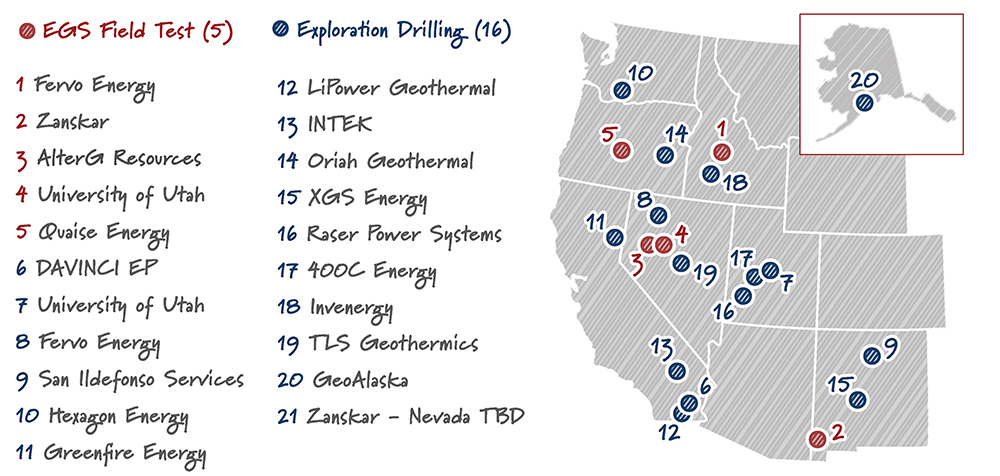
Zanskar, a Salt Lake City-based developer that deploys artificial intelligence to find overlooked geothermal resources, was one of just two companies to land awards in both categories. At its Lightning Dock project in New Mexico, Zanskar will test whether enhanced-geothermal techniques can wring more power from an already-producing field. In Nevada, a second award will fund a directionally-drilled confirmation well in an area that has never been tested, based on data from Zanskar’s AI modeling.
Fervo Energy also picked up two of the 21 awards, including an EGS field test in Elmore County, Idaho. Fervo’s success in this funding round is just the latest evidence the model works: years of federal support through DOE’s Frontier Observatory for Research in Geothermal Energy (FORGE) site in Utah helped the company boost drilling rates by as much as 143 percent, and Fervo has gone on to sign long-term power contracts with major utilities and tech companies to deliver the first commercial-scale EGS project.
Quaise Energy will use its award to test EGS on the flank of Oregon’s Newberry Volcano at bottomhole temperatures between 265°C and 365°C, temperatures greater than where most conventional drilling tools and materials have ever been validated. This combination of unproven geology and new technology is precisely the type of project a milestone-based federal demonstration program is designed to de-risk and allow private capital to follow.
The other 16 awards, led by companies like XGS Energy, Invenergy and GreenFire Energy, will uncover additional sites through earlier-stage activities. This category of projects seek to bolster the database of subsurface characterization for geothermal resources. Subsurface uncertainty is the single biggest reason private capital hesitates to invest in a project before it has proven, especially because drilling accounts for up to 80 percent of total geothermal project costs. Public data from these wells lowers that risk for the next company down the road, not just the one holding the DOE award.
Geothermal has quietly solved the technology risk even though it has seen a smaller federal demonstration budget than the multi-billion dollar programs for technologies like nuclear, hydrogen and carbon capture. While that gap has not stopped geothermal’s momentum, it has certainly made it harder for this reliable, clean, baseload energy source to reach gigawatt scale. Shrinking that funding gap represents an opportunity for Congress to supercharge the geothermal pathway toward commercialization.
The Geo POWER Act, led by Reps. Nick Begich (R-AK) and Susie Lee (D-NV) with a Senate companion from Sens. Steve Daines (R-MT) and John Hickenlooper (D-CO), would establish the kind of milestone-based federal demonstration program these 21 awards are already road-testing at smaller scale. The bill would unlock innovative, performance-based financing to reduce project risk, attract private capital, and expand next-generation geothermal into new regions of the country, beyond the handful of states where it operates today.
The combination of the Trump administration’s support for geothermal and geothermal’s proven array of commercial projects is the perfect match to support American drilling jobs, energy security and grid reliability. These factors also make it a natural fit for a robust energy innovation agenda in the next Congress. The innovators selected by DOE to advance these next-generation projects are well-suited to deliver on the energy dominance agenda.