Posted on August 6, 2026 by Anthony DiGrado and Greg Giannone
America is asking its grid to do more than ever, and a two hundred and fifty year old tradition of innovation is how we will meet this moment. Data centers, advanced manufacturing and a wave of reindustrialization are driving the fastest jump in electricity demand in decades. As Congress considers options to address this growing demand, ClearPath’s educational series, the Clean Energy Innovation Academy (CEIA), took nine U.S. House Republican staff to the Philadelphia region to see firsthand the infrastructure powering America: the grid that moves power across state lines and the plants that generate it around the clock. At every stop, the lesson was the same. For America to lead, we must innovate fast, build here and sell globally.
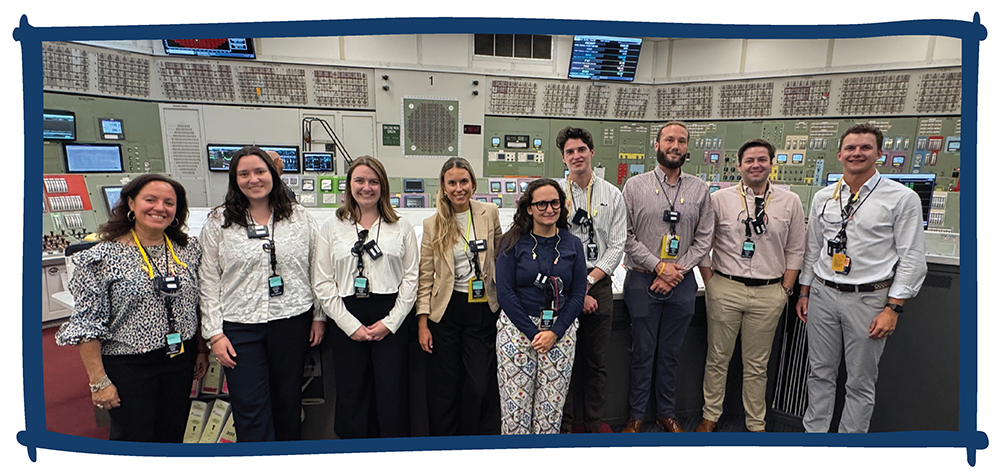
The grid is where reliability is won or lost: The delegation started at PJM Interconnection, the largest power grid in North America. From its control room outside Philadelphia, PJM balances supply and demand in real time for more than 67 million people across 13 states and D.C., coordinating roughly 180 gigawatts of generating capacity, 1,400 generating sources and 88,000 miles of high-voltage transmission lines. First, staff received an overview of PJM’s operations, including their role in planning the regional transmission system and how they are responding to surging demand growth. Then, the group moved to the control room to observe PJM’s grid operators in action, and learned about their complex responsibilities. Following the tour, staff participated in a discussion offering insight into how PJM’s transmission planning process works, including the role of competition in driving creative solutions and deployment of innovative grid technologies. Watching PJM staff run their system in real time drove home a point that rarely makes headlines: having transmission lines capable of bringing more power online and moving power to where it is needed can make or break grid reliability. The interconnection queue and pace of transmission development now sit at the center of whether America can meet rising demand. That makes getting the process right one of the highest-impact moves in energy policy today.
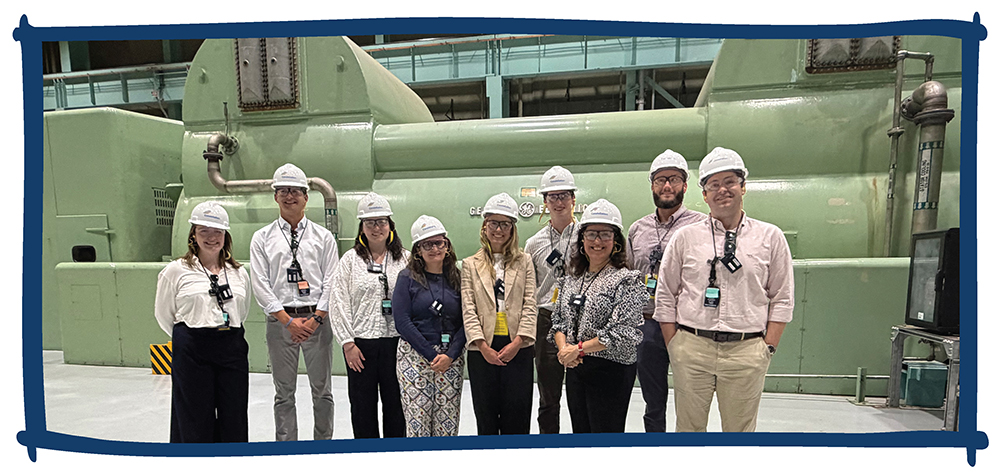
America’s nuclear fleet is a platform to build on: Following the visit to PJM, staff traveled to Constellation’s Limerick Clean Energy Center in Pottstown, PA. The nuclear power plant runs two Boiling Water Reactors that produce a combined 2.3 gigawatts of carbon-free power (enough for more than 1.7 million homes) 24/7. Constellation is the nation’s largest producer of emissions-free energy, operating 21 reactors across the country, and plants like Limerick are increasingly central to conversations about serving data centers and new factories. Limerick staff briefed the group on the basics of nuclear energy, how the plant operates, its planned uprate and Constellation’s efforts on the Three Mile Island restart. Then, they toured the plant, beginning with the outside grounds, which included the facility’s two cooling towers, spent fuel dry casks, emergency operations areas and transmission interconnection substation. They were then led inside to see the plant’s generators, turbines and control room, where they were able to discuss directly with operators on how to advance nuclear energy in the United States. With energy demand projected to grow 35 to 50 percent by 2040, plants like Limerick show how far American ingenuity can expand on a proven asset. That same expertise is the launchpad for what comes next: the new large reactors and advanced designs that will power the next era of American growth.
Innovation means modernizing the rules, not just the hardware: Technology is only half the equation. Staff also heard from innovators like Tapestry and an industry expert at R Street Institute on how the best technology in the world stalls if the rules around it do not keep up. Getting transmission planning, cost allocation, siting and interconnection right, as well as navigating an archaic permitting process, often decides whether a project ever breaks ground. Without swift action to match the speed of permitting to American innovation, the country risks leaving new generation and transmission stuck waiting rather than on the grid.
Philadelphia is a fitting place to make the point. Two hundred fifty years after the country was founded, the question is the same one it has always been: can America build what it needs to power the next era? Constellation’s Limerick Clean Energy Center and PJM Interconnection are proof that we can, if we let America build.The path forward is to let them work, to modernize the rules and invest in the fleet and wires already delivering power, keeping American energy leadership strong at home and abroad. Innovate fast, build here, sell globally: the demand is real, and the opportunity has never been greater.