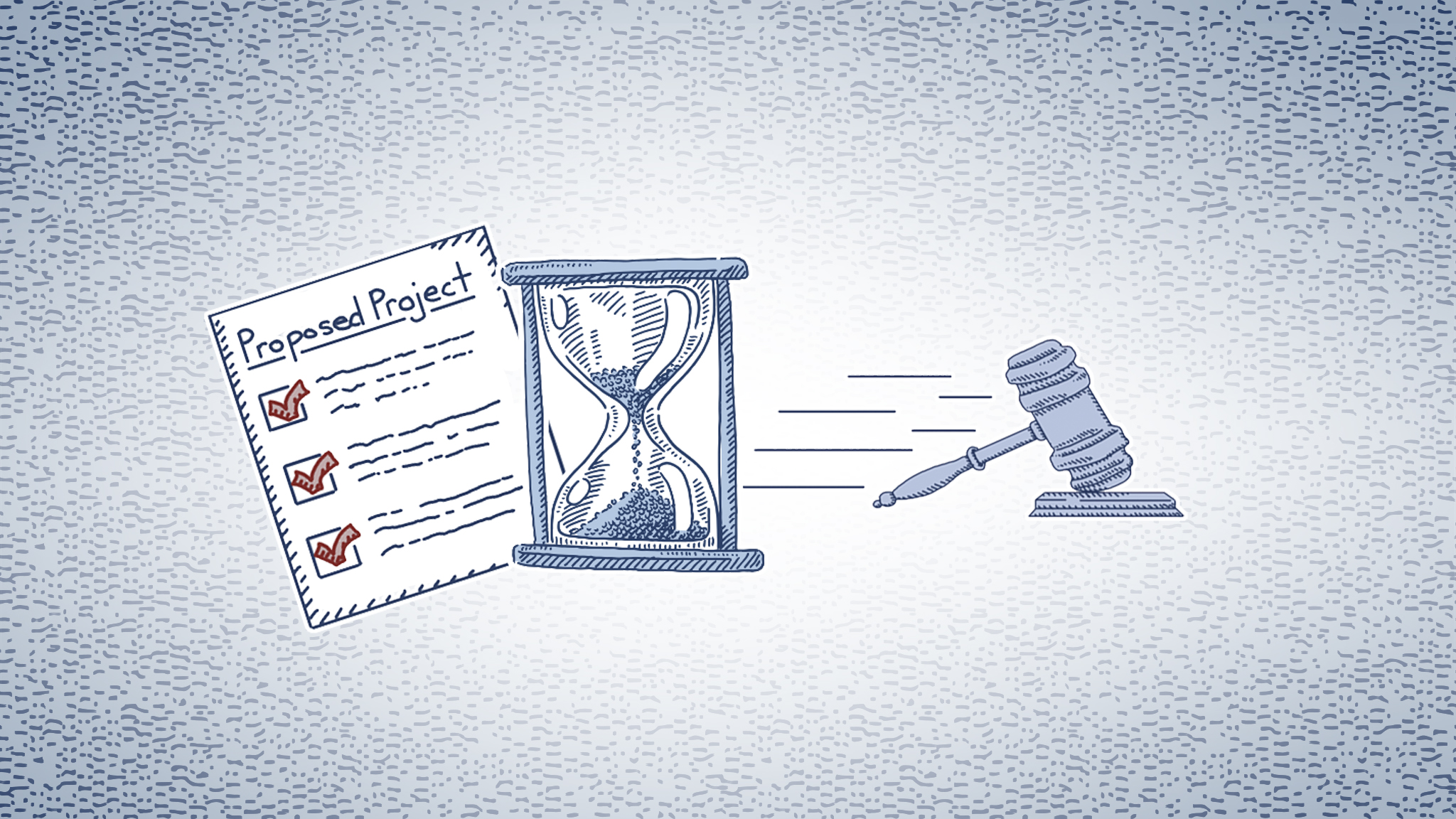
Nuclear, geothermal, transmission and every other energy source America needs share the same bottleneck: a permitting process that takes years longer than the projects themselves. Reviews that should take months now stretch past a decade because the process itself has no functioning deadline.
Modernized permitting means clearer timelines, coordinated agency review and judicial review that resolves disputes instead of becoming a default veto, so good projects can get built without lowering environmental standards.
Explore ClearPath's research, testimony, and analysis on permitting reform below.
THE STATE OF PLAY
America's permitting system is slow, costly and unpredictable.
4–5 yrs
Average time for a project to move through federal permitting, across sectors.
$100–140B
Lost every year to permitting delay in jobs, revenue and capital returns.
74%
Of NEPA cases are won by federal agencies — litigation delays more than it changes.
28%
Of projects in an environmental impact statement took over five years to a decision.
Median environmental impact statement
Notice of intent to final statement, in years
2017–2020
3.1
2021–2024
2.4
Statutory deadline
2.0
Reviews got faster, but ten-year averages are unchanged — incremental fixes have not moved the system. Source: Council on Environmental Quality; Breakthrough Institute; McKinsey & Company.
Our team spends a lot of time on reliable, affordable, clean energy systems that run 24/7. These types of technologies are an integral part of our energy future, but with a growing economy and electricity demand doubling, we need MORE power. This means building a lot of new nuclear, geothermal, and clean fossil power plants. […]
Permitting Reforms Championed by House Republicans are the Lone Bright Spots in the Biden Admin’s NEPA Rule The electric grid is on the cusp of a huge expansion. With a massive amount of new energy demand on the horizon, grid operators are already bracing for huge amounts of growth. The sudden increase in 5-year load […]
The United States is in the midst of an energy revolution. Demand for new energy will reach all-time highs, breakthrough technologies are beginning to commercialize, and existing technologies are innovating new, cleaner ways to produce more energy. It’s all very exciting. The U.S. Department of Energy (DOE) can play an important role in meeting this […]
Rapid electricity demand growth is no joke. It’s happening much faster than grid planners anticipated and some estimates show a need to double the U.S. grid by 2050. On top of that demand, most large utilities and producers have commitments to make it all clean. Wind developments are hitting headwinds, solar manufacturers have supply chain […]
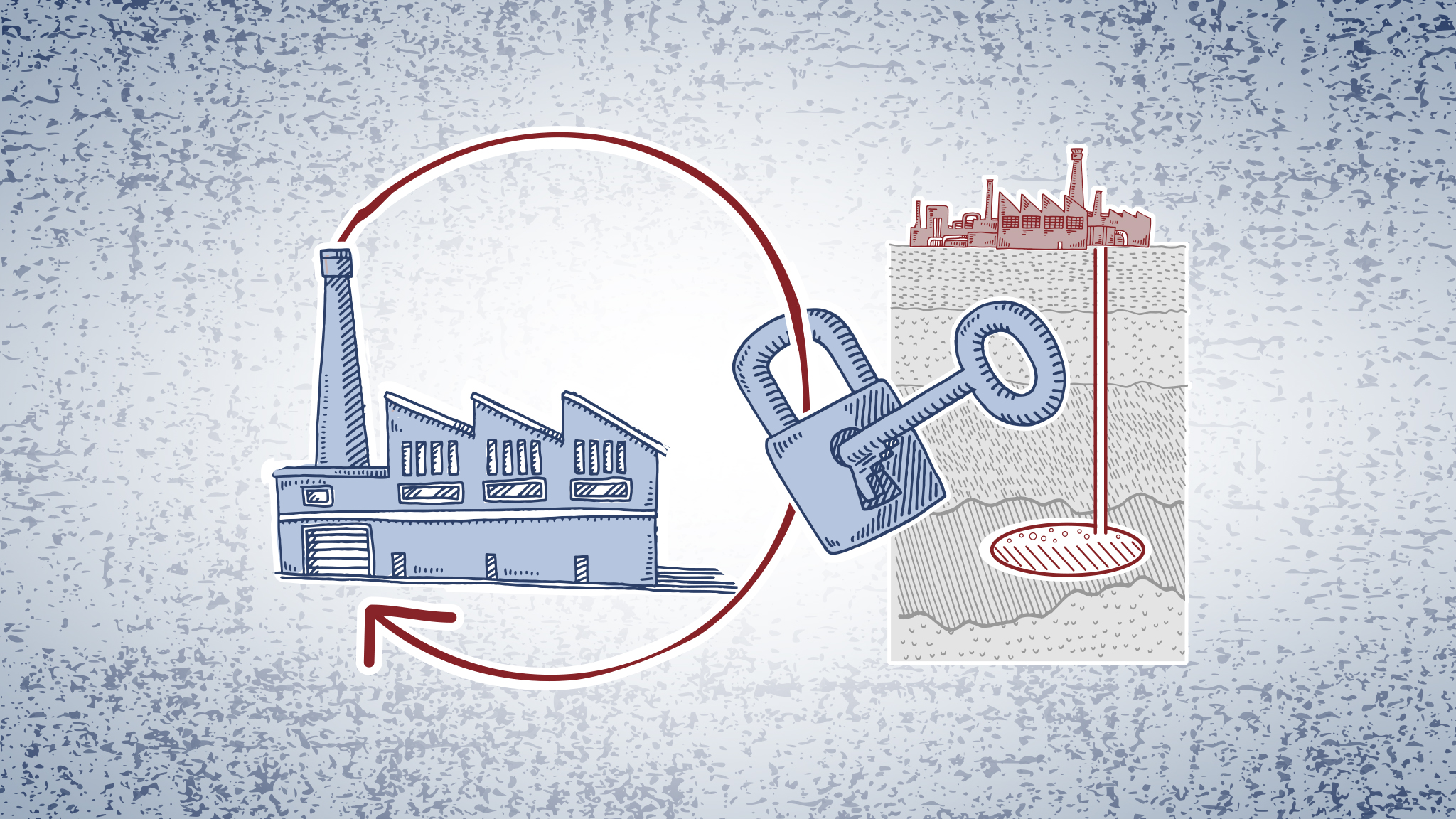
Carbon storage is carrying momentum into 2024 following big year-end developments, with Louisiana obtaining regulatory primacy for carbon storage and Wyoming permitting its first set of Class VI wells. After years of delays and bottlenecks at the federal level, states are taking the lead to move these projects forward. Both of these developments help address […]
Over the course of this year, Congress wrestled with big permitting questions. House Republicans passed H.R. 1, the Lower Energy Costs Act, earlier this year with bipartisan support and some of the provisions from H.R. 1 were included in the debt ceiling deal codified by the Fiscal Responsibility Act. Yet, after it passed, the Biden […]
This year at New York Climate Week, ClearPath partnered with the American Petroleum Institute (API) to host an event showcasing the future of carbon management. The conversations underscored the opportunity for the oil, gas and petrochemical industries to lead the carbon dioxide emissions reductions at scale. The event brought together top thought leaders, project developers, […]
The Biden Administration Doubles Down on a Broken Permitting System Some estimates say the U.S. will need to double the capacity of our grid by 2050 to meet demand. That means we’ll need to build an incredible amount of new energy projects — like 21,300 to 27,700 new clean energy projects by 2030 which is […]
Thousands of towns and communities across the country have been providing the power and fuel needed to run America for decades. While many of these “Energy Communities” are still booming, others have experienced plant closures or waning extraction efforts. Congress has passed new financial incentives to encourage investments in these areas, but now we need to fix permitting to allow the developers to build.