Posted on December 4, 2025 by Chase White and Jake Kincer
Fusion energy, generated by combining atoms like hydrogen, has the potential to supply enormous amounts of clean energy. Decades of research have brought this technology to the precipice of first-of-a-kind commercial deployment. Today, there are 45 fusion energy companies in the United States, and several of them are aiming to build a commercially viable fusion power plant between 2030 and 2035. If America leads the way in deploying this technology, we could establish a new manufacturing industry, new long-term energy partnerships and trade agreements, and a foundation for global energy dominance.
Without investments in public-private partnerships and a resilient domestic supply chain, America risks ceding leadership to its foreign adversaries. China is investing at least $1.5 billion annually in fusion, although some reports suggest significantly more, and already possesses robust supply chains for power electronics, forged parts and the advanced materials necessary to commercialize this technology. Similarly, allied nations like Germany and the UK are also investing huge sums, with Germany investing over $2 billion by 2029 and the UK investing around $3 billion over the next five years.
The Commission on the Scaling of Fusion Energy (CSFE), led by Senators Jim Risch (R-ID) and Maria Cantwell (D-WA), and Ylli Bajraktari, the President of the Special Competitive Studies Project, published a report that lays out a plan to ensure the United States acts with purpose to capitalize on this technology. The CSFE report outlines a list of three strategic actions the U.S needs to win the fusion race:
The DOE Office of Science released its Fusion Science & Technology Roadmap, which sets a national strategy to accelerate the deployment of commercial fusion power by the mid-2030s. The roadmap outlines three core pillars that are essential to American fusion success:
In November 2025, the DOE released its new organizational structure, which includes a standalone Office of Fusion Energy, reporting to the Under Secretary for Science. Together, these announcements reflect a growing sense of urgency amongst both Congress and the Trump Administration to deliver fusion power to the grid within the next decade and secure enduring U.S. leadership in this emerging industry.
Today, companies are already proving that commercialization is no longer speculative. Among the many industry accomplishments, Commonwealth Fusion Systems (CFS) is building its SPARC (by 2027) and ARC (by the early 2030s) power plants using advanced superconducting magnets. Helion Energy raised $425 million in 2025 and, in partnership with Microsoft, is constructing a commercial fusion plant in Washington state, which aims to enter operation by 2028. In February, Type One Energy signed a cooperative agreement with the Tennessee Valley Authority to initiate fusion deployment. Serious investors and tech companies are placing very real bets on this technology.
Recent Notable Investments into the Fusion Sector
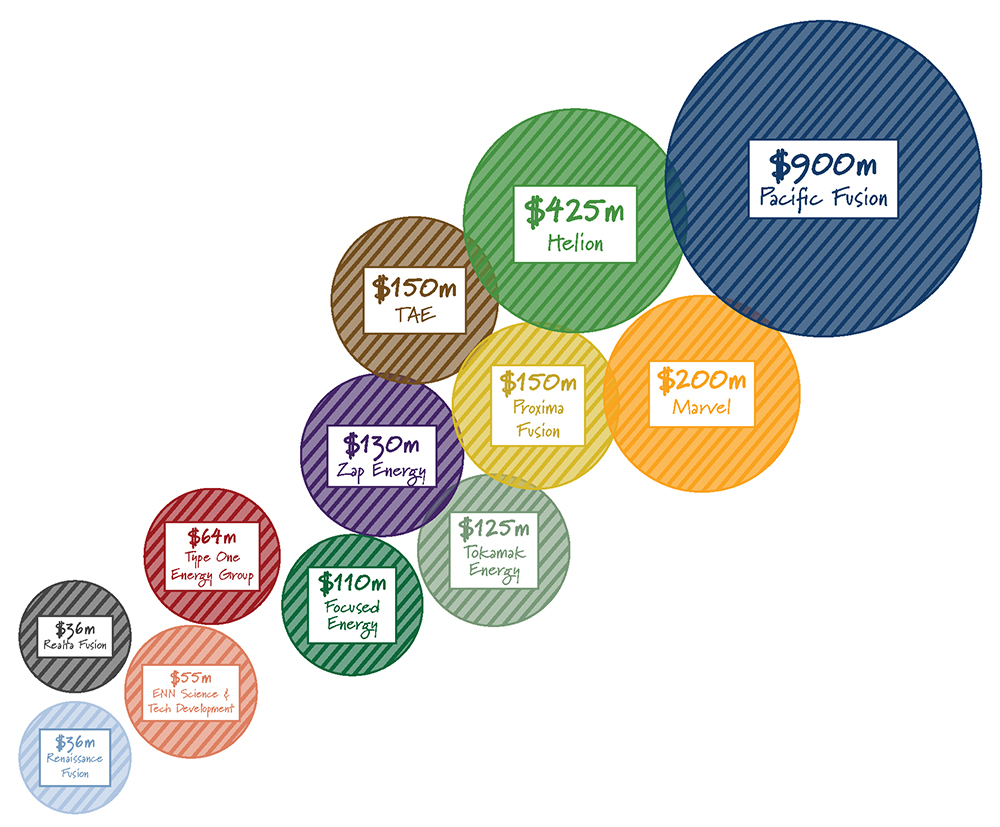
Source: Fusion Industry Association, “The global fusion industry in 2025“
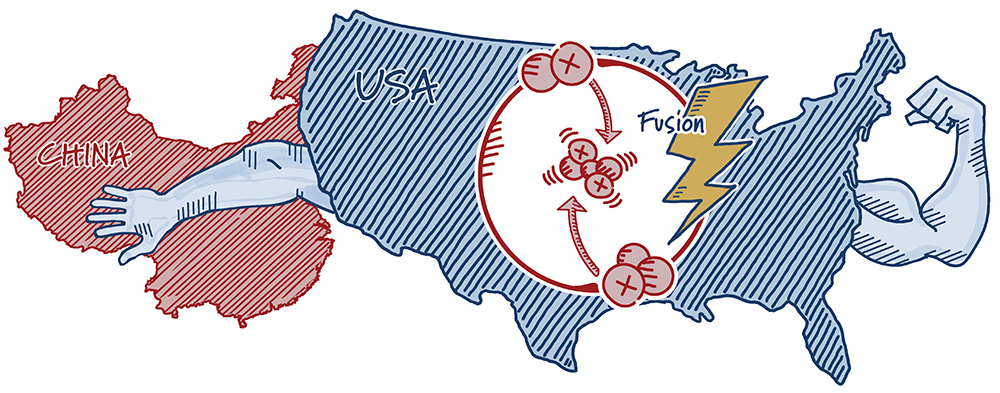
China invested $1.5 billion in fusion last year, nearly double U.S. funding of $800 million. Additionally, state-owned enterprises have been investing heavily in fusion supply chains to ensure a swift path to commercialization. As part of this initiative, in July 2025, China established a new state-owned fusion company known as the China Fusion Energy Co. (CFEC) to accelerate commercialization. Since its genesis, CFEC has registered $2.1 billion in raised capital. This new company is just one example of China’s commercialization efforts to complement its scientific advances at its two main fusion enterprises, the Institute of Plasma Physics and the Hefei Institute of Physical Science. In contrast, despite private industry momentum, the U.S. fusion industry currently lacks the supply chains and infrastructure required to sustain a full commercial buildout.
Energy drives all human prosperity, which is why the Trump Administration has made American energy dominance a core policy priority. America now faces an opportunity to commercialize an entirely new source of energy. This moment is a rare opportunity for America to dominate an entirely new energy technology, building energy security and supporting reindustrialization. The private sector is ready, but it cannot outcompete state-backed corporations alone. The Trump Administration laid out a roadmap for U.S. leadership in fusion; now it’s time to capitalize and win.